Since its 2022 launch, LangChain has grown from a way to chain a few model calls together into an umbrella for a small ecosystem: LangChain itself for building, LangGraph for orchestrating longer runs, and LangSmith for watching what actually happened. The diagram below lays out what each layer is responsible for.
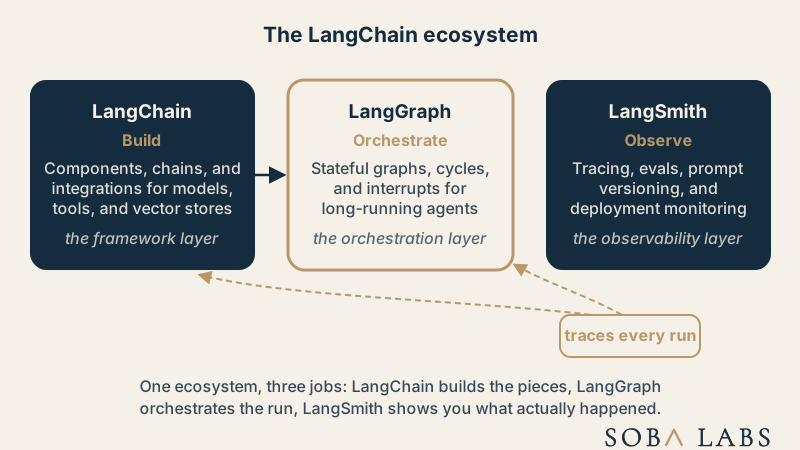
LangChain is not one thing anymore. It is the framework, the orchestration layer built on top of it, and the observability platform that watches both.
What problem does LangChain actually solve?
Before a framework like this existed, every team wired its own glue between a model, a vector store, and whatever external tools an AI agent needed to call, and rebuilt that glue for every new project. LangChain standardizes the pieces: a common interface for calling a model regardless of provider, prebuilt components for retrieval, and a library of integrations to the tools and data sources a real agentic AI system actually needs, so a team assembles instead of reinventing.
LangChain vs LangGraph: what is actually the difference?
LangChain provides the components; LangGraph provides the control flow for running them as a stateful, cyclical process rather than a straight line. A simple retrieval pipeline or a single tool call rarely needs LangGraph at all; the moment a workflow needs loops, branching decisions, or a human approval gate partway through a long-running agent, that is the point LangGraph earns its place on top of LangChain’s components.
Where does LangSmith fit into all of this?
LangSmith sits alongside both, tracing every step of a run built with either one so a team can see exactly what an agent did, evaluate whether it did the right thing, and debug a regression instead of guessing from the final output. Together the three form one practical answer to a build-vs-buy question that comes up on nearly every agentic workflow project: build the framework glue yourself, or start from components the wider ecosystem already tests and maintains, whether LangChain’s own or TypeScript-first options like the Vercel AI SDK.
Why does Soba Labs care about LangChain specifically?
We are LangChain’s Ambassador for Poland, the program LangChain runs to recognize teams building real, production agentic systems on its stack and helping others in the region do the same. It is not a badge we picked for the page; it reflects how much of our own delivery work, including the systems behind halving our own agents’ token usage, runs through this exact ecosystem day to day.