Most teams evaluating agentic AI ask the wrong first question: full automation or a person doing everything. The real choice is narrower and much less risky, which specific steps in an otherwise automated workflow actually need a person’s judgment before they happen. Deciding who owns the agent between those steps is a separate question, covered by human-agent teaming. Getting that placement right is usually the difference between a system leadership will trust with real work and one that gets quietly switched off after the first expensive mistake.
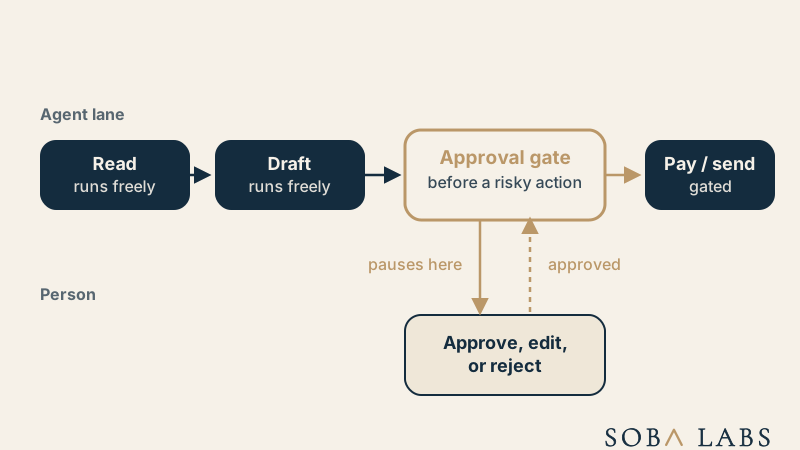
Human in the loop is not a brake on automation. It is what makes automating the risky parts of a workflow safe to approve in the first place.
Why does an agentic system need a human in the loop at all?
A language model can be confidently wrong, and an agentic system that acts on every decision it makes will eventually act on a wrong one. The fix is not reviewing everything, it is gating only the actions that are expensive or hard to reverse if the system got it wrong, sending an email to a customer, executing a payment, deleting a record, while letting the reversible, low stakes majority of steps run unattended.
Where should the approval gate actually go in a real workflow?
The gate belongs at the last point before an action stops being easy to undo. Research, drafting, and internal analysis can usually run freely; the step that sends, pays, publishes, or deletes is where a person’s judgment earns its cost. This is also where AI readiness work pays off before you build anything: a workflow that is not ready yet is usually one where nobody has actually decided where that line sits.
Does a human in the loop apply the same way to a multi-agent system?
Yes, and it usually gets simpler, not harder. In a multi-agent system, the approval gate typically sits with the orchestrator or the single agent whose action is actually risky, not scattered across every worker, since most workers only ever produce intermediate results that a person never needs to see. An AI agent built without any gate at all is the fastest way to lose a stakeholder’s trust the first time it acts on a wrong assumption with nobody watching. It is the boundary we drew in the Ryba Wooden operations audit, where the risky steps keep a person on them.